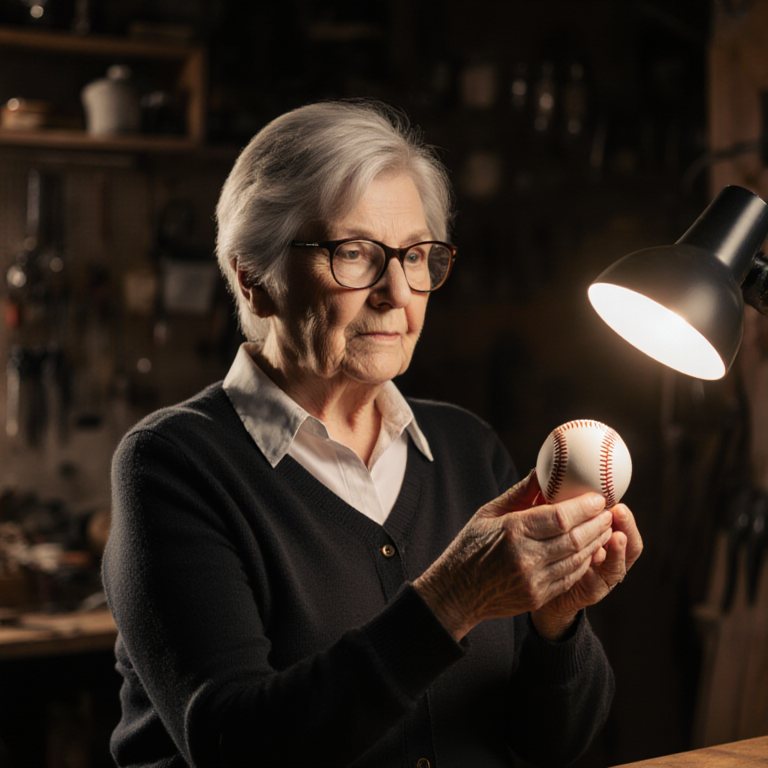
Margaret Hargrove
Head of authentication
Third generation. Reads wood and ink. Writes every certificate herself and will not sign one she is not certain about. She declined the first piece she was offered in 2019 and told the family why.
The story
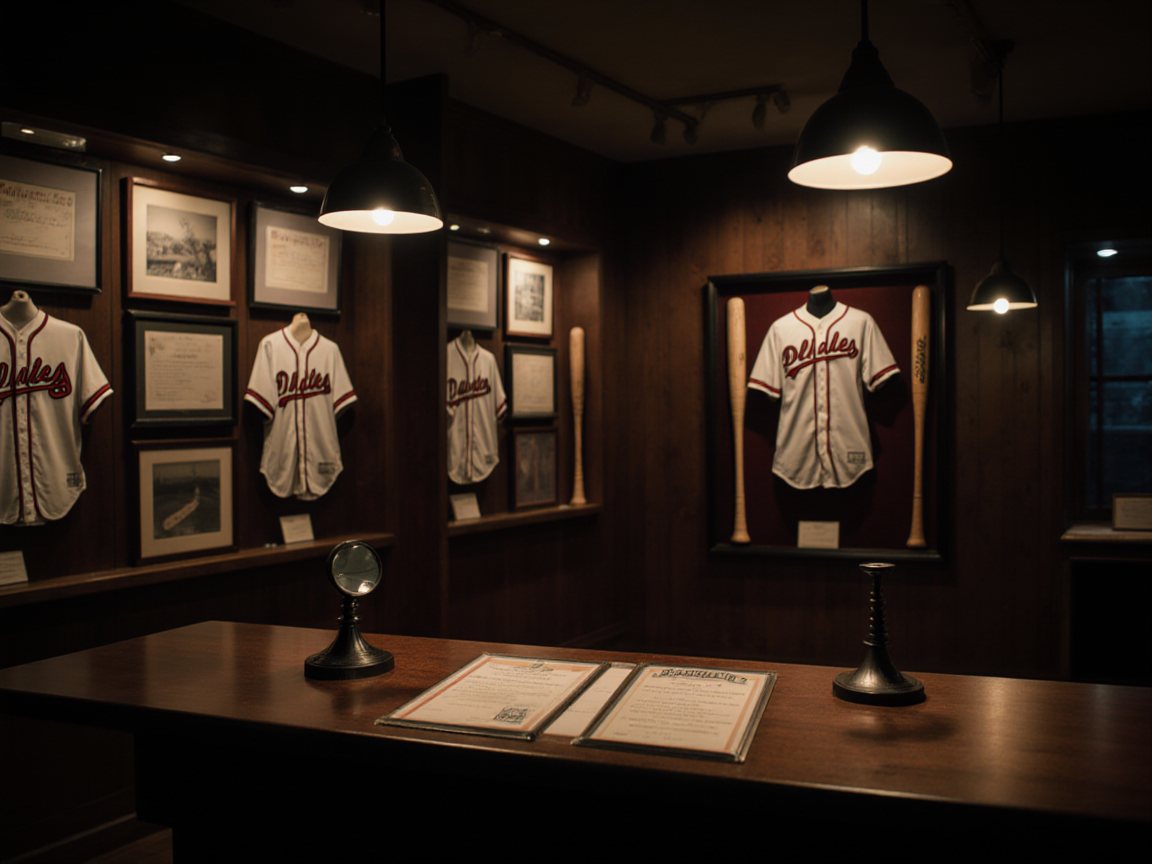
In 1978 Wilbert Hargrove kept a shelf in the back of his hardware shop on Pike County Road. It held a bat, three balls, and a jersey with a club repair he could not explain. He wrote what he knew about each one on cards and refused to sell anything he could not support.
He sold the jersey in 1981 after a club seamstress confirmed the stitch count. That is still the method: look at the object, find the documents, write down what matches and what does not, and let the buyer read both.
The shop moved to the old grist building on Union Wharf in 1994, and the family has run it there ever since. We do not advertise urgency, we do not round up a grade, and we do not sell a piece we could not defend in writing.
The process in depth
1 · Physical examination
Wood is read under raking light: stick pattern, grain bruising, knob diameter, and whether the finish is original or was touched up. Wool flannel is read by stitch count per inch and by thread type. Paper is read by stock, punch, and the type the box office used. Ink is compared against known examples rather than against memory.
2 · Documentary comparison
Photographs, club records, newspapers, box office receipts and family documents are matched to the piece. A photograph that shows the same chip on the same knob is evidence. A story from a relative is not, and we say which is which.
3 · Certificate and file
The certificate lists the grade, the faults, and any claim we could not support. The full file travels with the piece. The certificate number is printed on the slab, the case or the brass plate so the piece and the paper cannot be separated later.
4 · What we decline
Roughly one in five pieces offered to us is declined because it cannot be documented. A declined piece is still written up, and the seller is told exactly what is missing. That is not a courtesy; it is the standard.
The team
Head of authentication
Third generation. Reads wood and ink. Writes every certificate herself and will not sign one she is not certain about. She declined the first piece she was offered in 2019 and told the family why.

Provenance researcher
Works the county records, box office receipts and the club's surviving paperwork. Built the file for the 1931 Coalers jersey from a stitch count and a trunk inventory list.
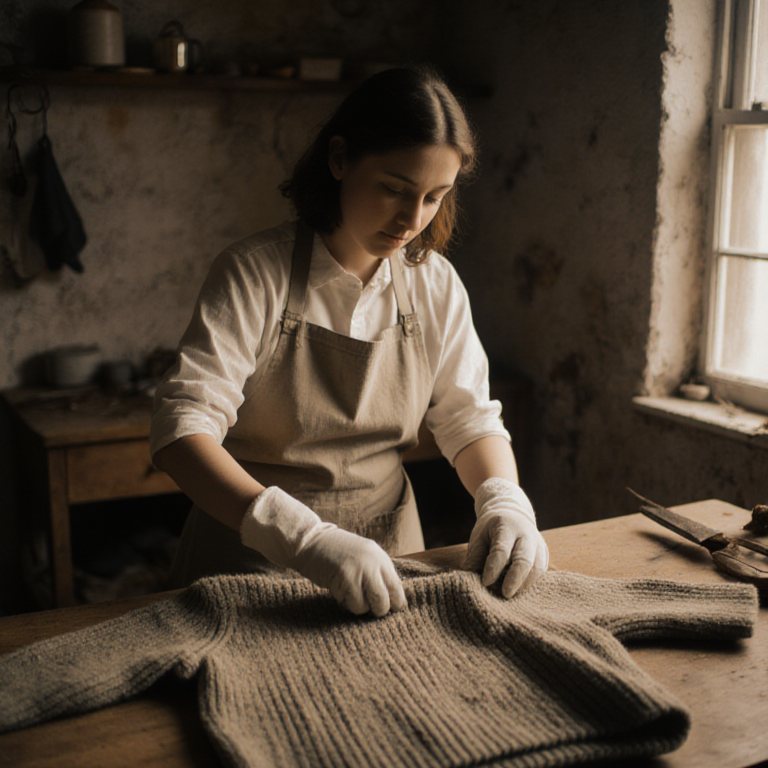
Conservation and display
Builds the cases and mounts in the shop. Handles humidity, light and airflow, and is the reason we sell ventilated garment cases rather than sealed ones.